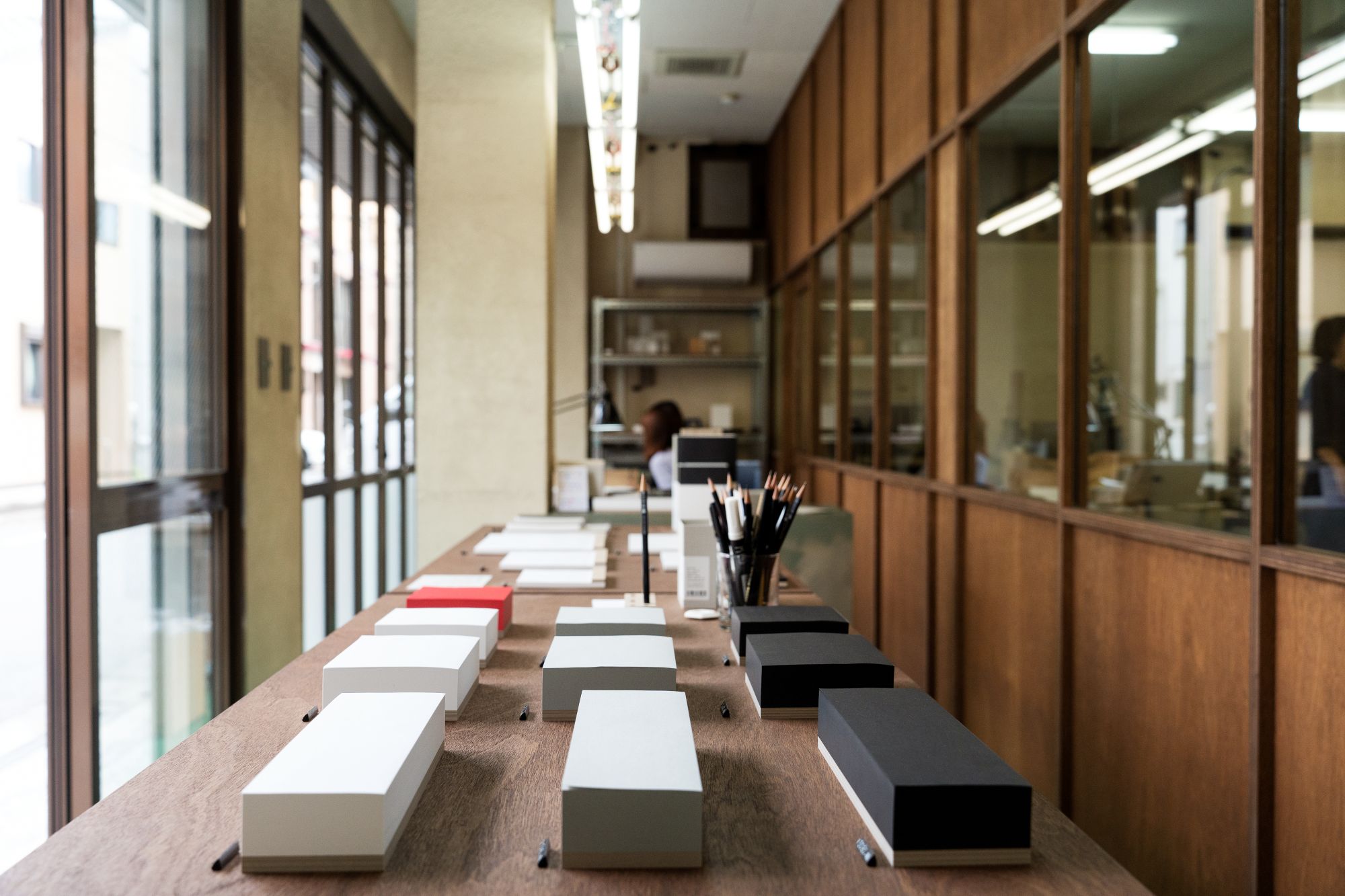


We do not make paper ourselves.
For ITO BINDERY’s original products, we use paper made at selected mills in Japan. Paper supplied by our clients also arrives at our factory from various parts of the country.
Every day, we look at these different papers, touch them, and turn them into finished products.
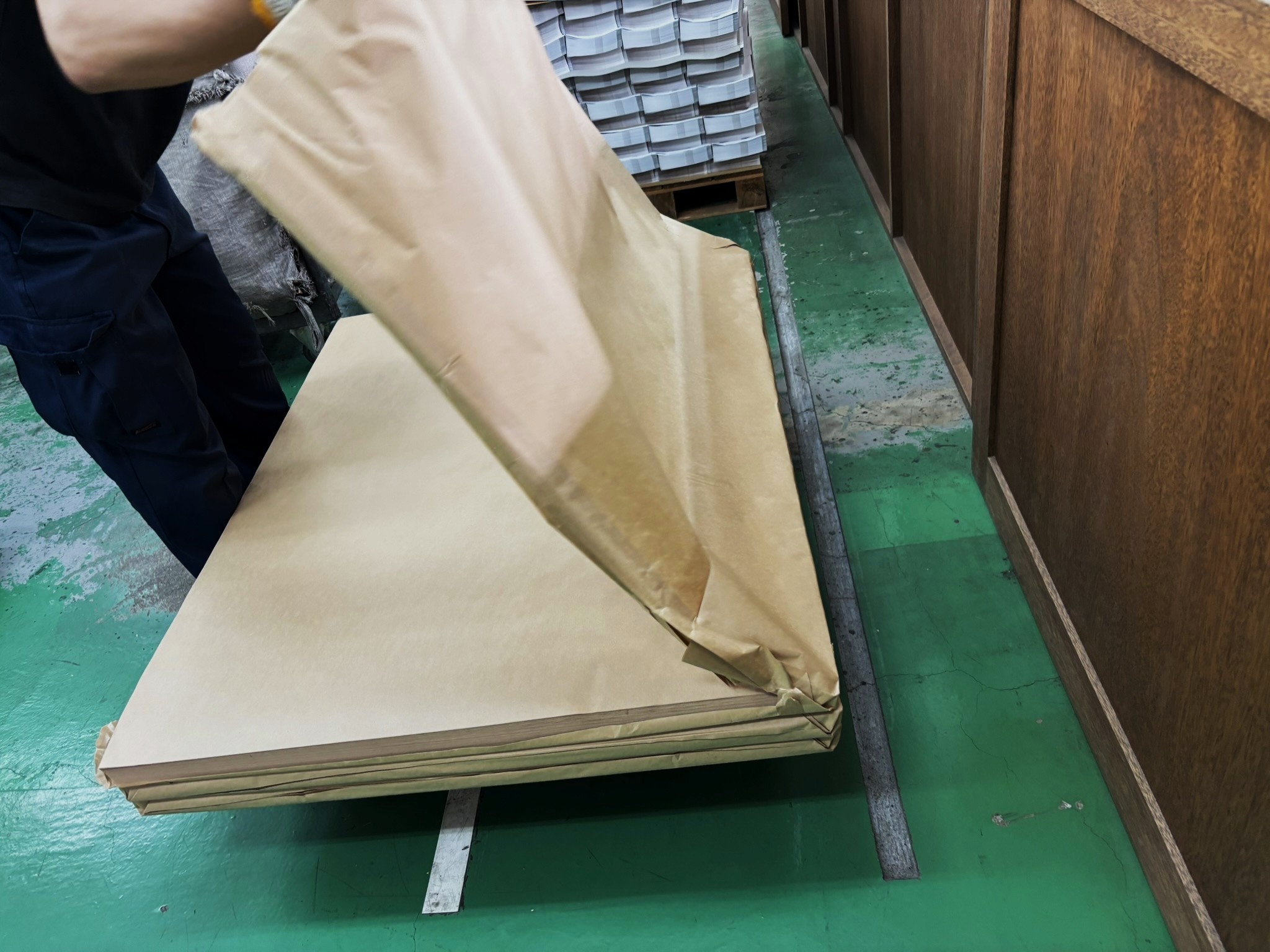
Paper may look the same every day.
But to us, it is never quite the same.
Depending on the temperature and humidity, paper can expand slightly or contract. Too much moisture can make it wavy, while very dry conditions or prolonged exposure to direct sunlight can cause it to curl.
Paper changes little by little with the seasons and with the conditions inside our factory.
Almost as if it were breathing in the air around it.
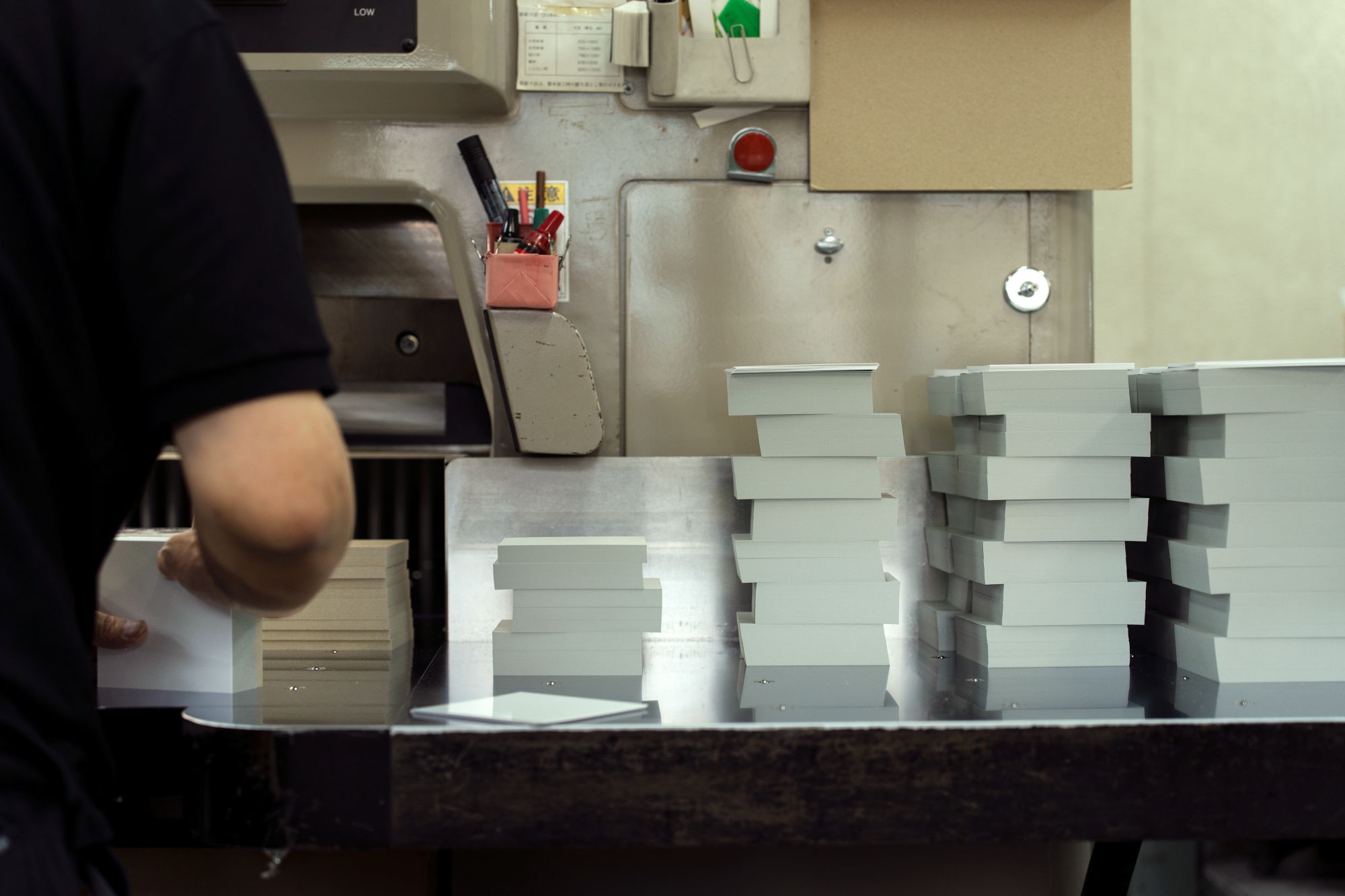
”What is the moment when you notice the effect of humidity on paper the most?”
We asked our factory manager.
”Whether it has been printed or has just arrived from a paper supplier, it’s after we unwrap
it and leave it for a while.”
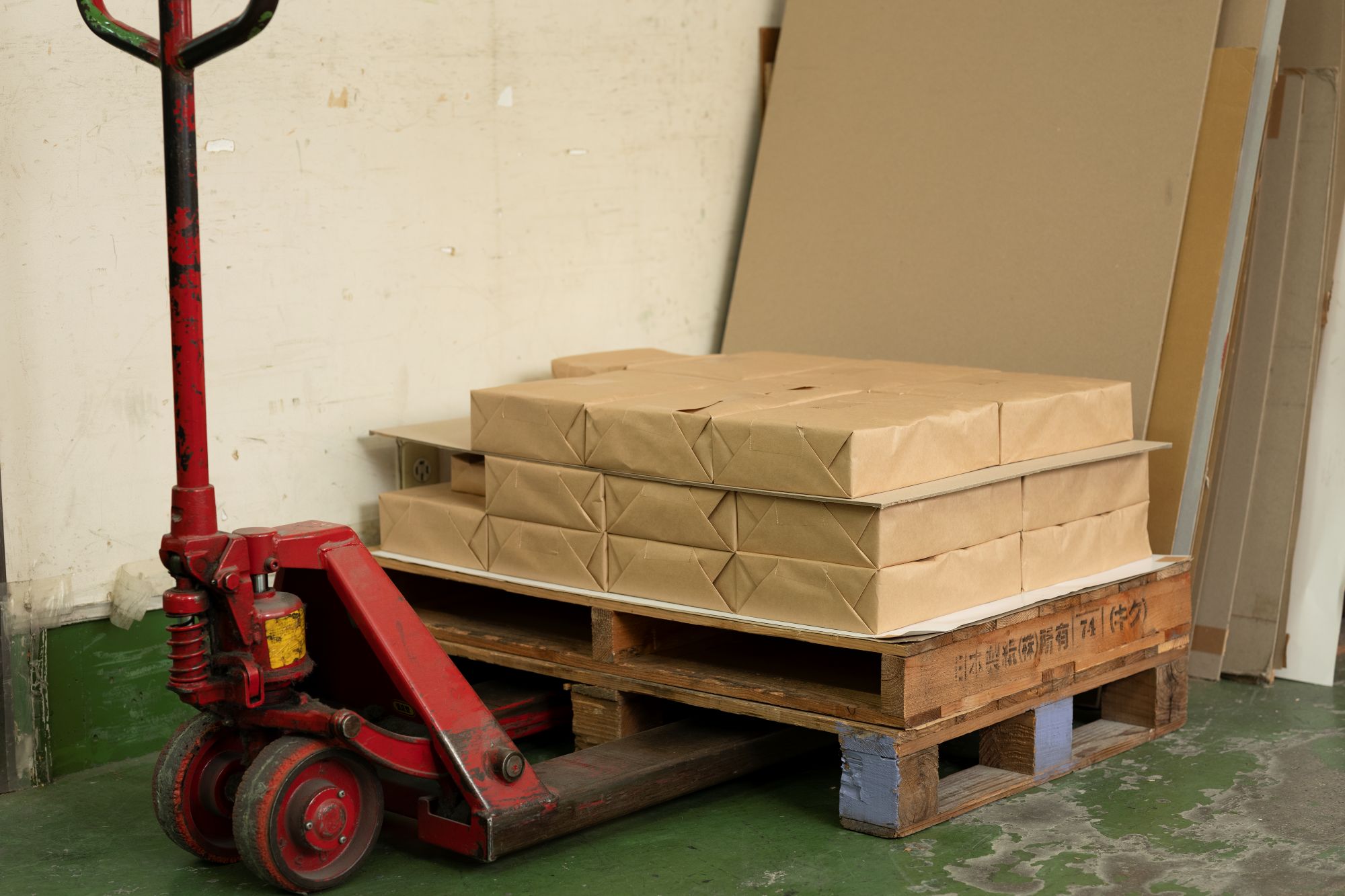
Once the paper is unwrapped, it meets the air inside the factory.
After a while, it begins to show subtle changes, almost as if it were slowly absorbing the surrounding air.
It is not that you touch a sheet of paper and immediately think, ”It feels different today.”
Instead, we watch how the paper gradually changes after being unwrapped and exposed to the factory environment, and then decide how to proceed with the next process.
If the paper is not moving on to the next process right away, we cover it again.
During a lunch break.
Or at the end of the day, when the work will continue tomorrow.
We gently place a protective sheet over paper that is still in process.
So the paper can settle.
Before a longer holiday, we sometimes wrap the covered paper in plastic film as an additional layer of protection.
The aim is to keep its condition as stable as possible until work begins again.
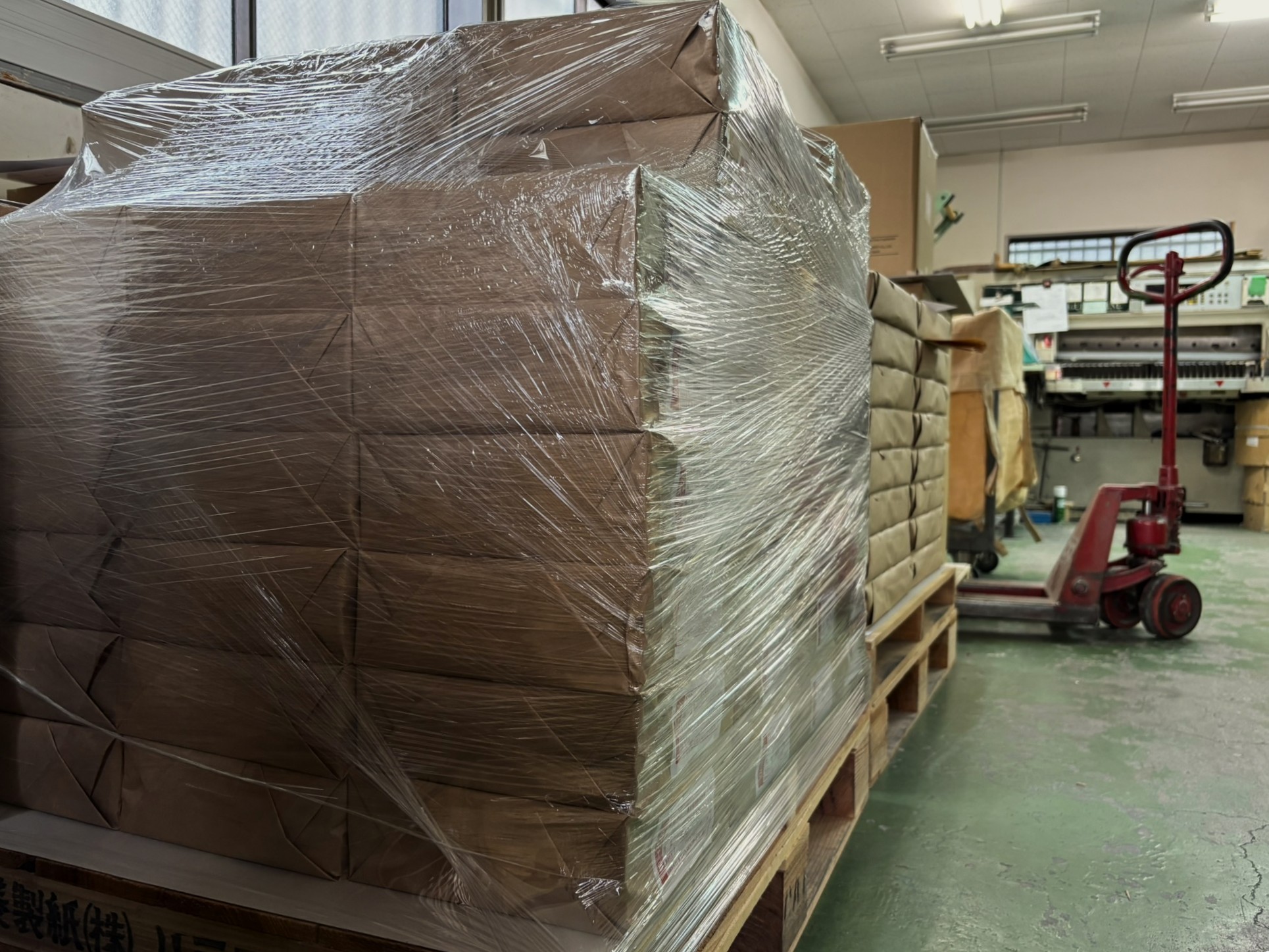
If paper becomes wavy or starts to curl, we may use weights or sheets of board to apply even pressure.
When paper is stacked, the sheets toward the bottom tend to remain more stable, while those on top, where they are more exposed to the air, are more likely to show changes.
During dry seasons, static electricity can also make paper difficult to align. Sheets that should feed through a machine one at a time may cling together instead.
At times like these, too, we watch the paper carefully and adjust the way we work.
Different types of paper behave differently.
Printed paper can behave differently as well.
Temperature and humidity make a difference, too.
There is no single answer that says,
“This is this kind of paper, so this is always the right way to handle it.”
We look at it, touch it, and respond to the condition of the paper in that moment before moving on to the next process.
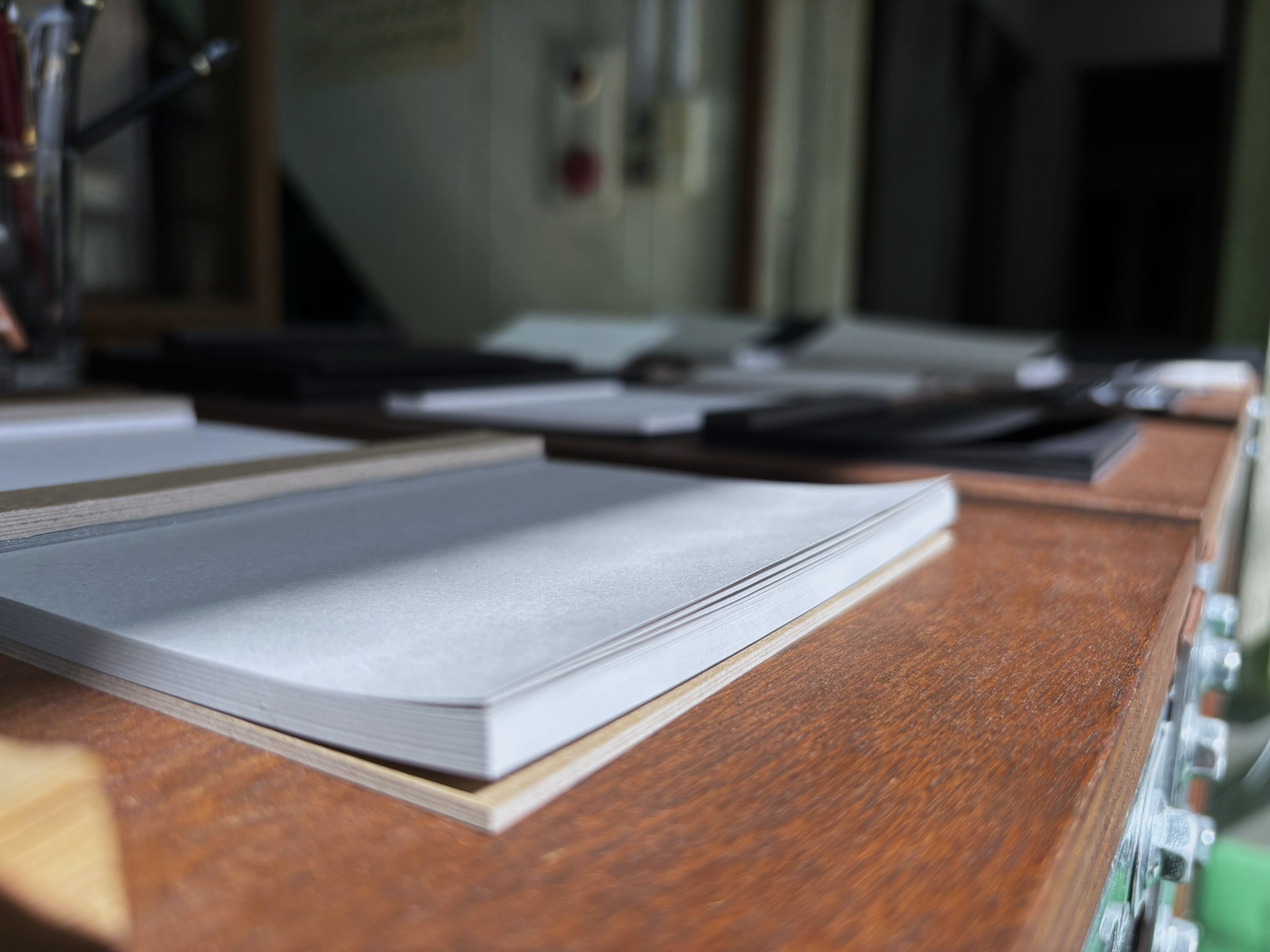
These are small things we do almost without thinking, every day.
Covering the paper.
Gently placing a protective sheet over it.
Each is a small but important part of our work.
Paper may look the same every day.
But each day, its condition is a little different.
We pay attention to those changes and keep the paper in the best condition we can as it moves on to the next process.
Working with paper, and responding to its subtle changes, is also part of what we make every day.