


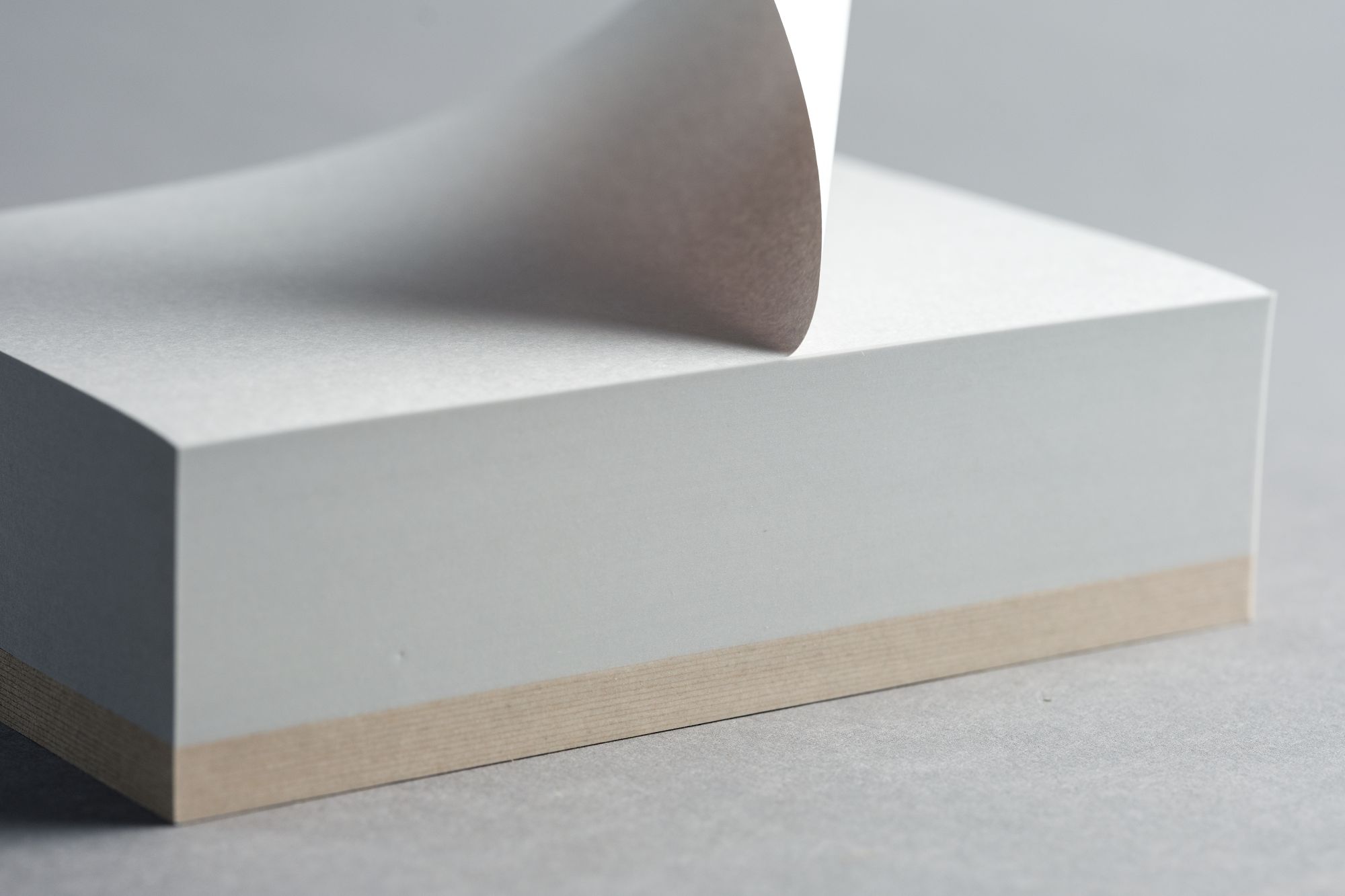
Aligning Paper
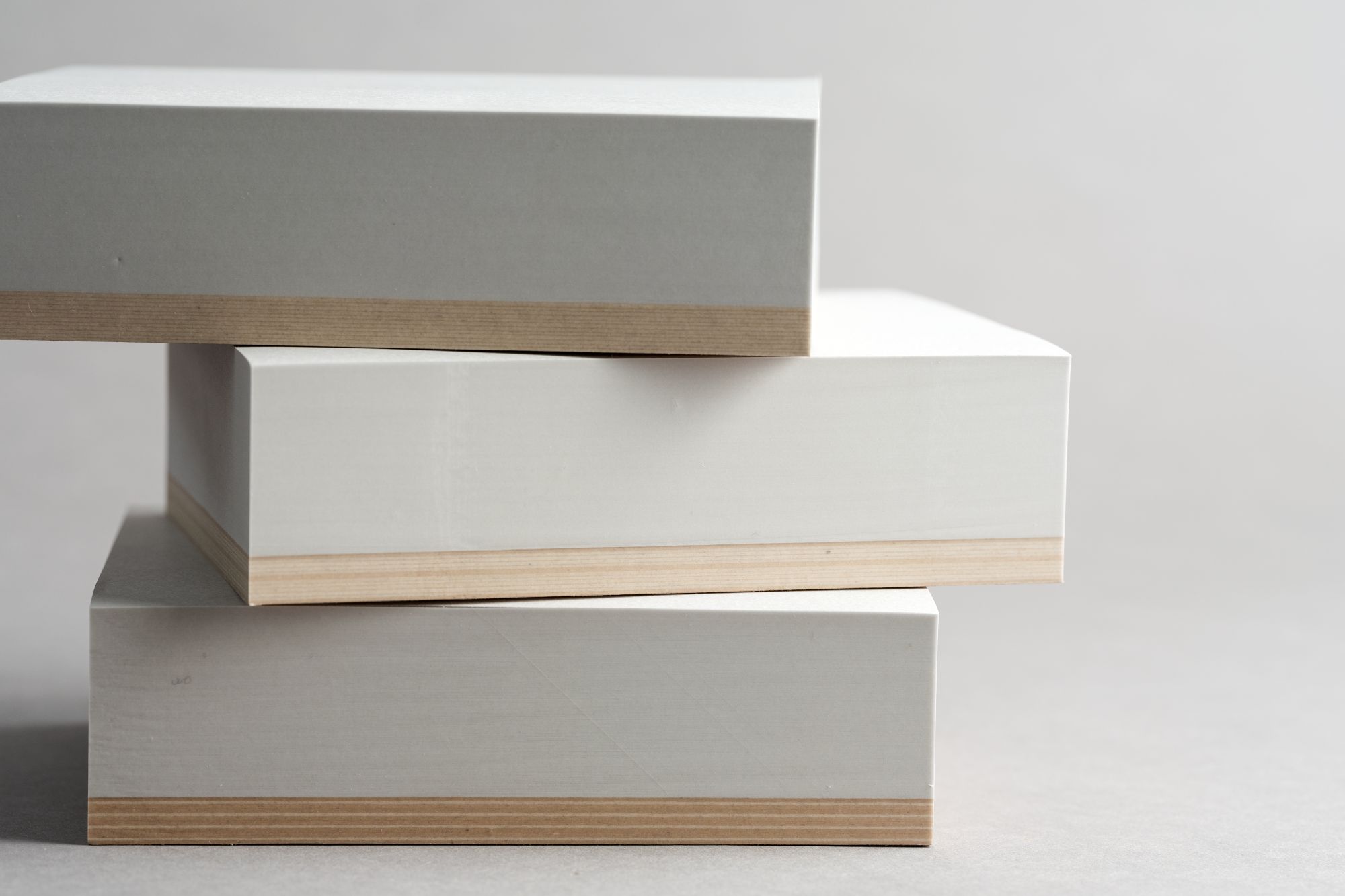
Run your finger along the side of a Memo Block, and the hundreds of stacked sheets seem to become a single, smooth surface.
But this clean edge is not created simply by making a final cut with a cutting machine.
The sheets are stacked. Their positions are aligned. Air is introduced between them. The paper is adjusted according to its condition, then passed on to the next process.
In bookbinding, a single product goes through the act of “aligning” paper many times before it is complete.
Aligning Each Type of Paper
Large sheets and small sheets. Thick paper and thin paper. Paper with different grain directions. Printed paper. Even though the work may look like the same act of aligning, the way we move our hands and handle the paper changes depending on the paper itself and the time of year. Before cutting large sheets, we fan the stack by hand to introduce air between the sheets, then align them.
With thin paper, more air is introduced between the sheets. Thicker paper tends to align more easily with air and vibration. The direction of the paper grain also affects how we handle and align the sheets. For example, when the grain runs across the sheet, we hold the near side of the stack as we fan it. When the grain runs lengthwise, we hold opposite corners diagonally so that more air can enter between the sheets.
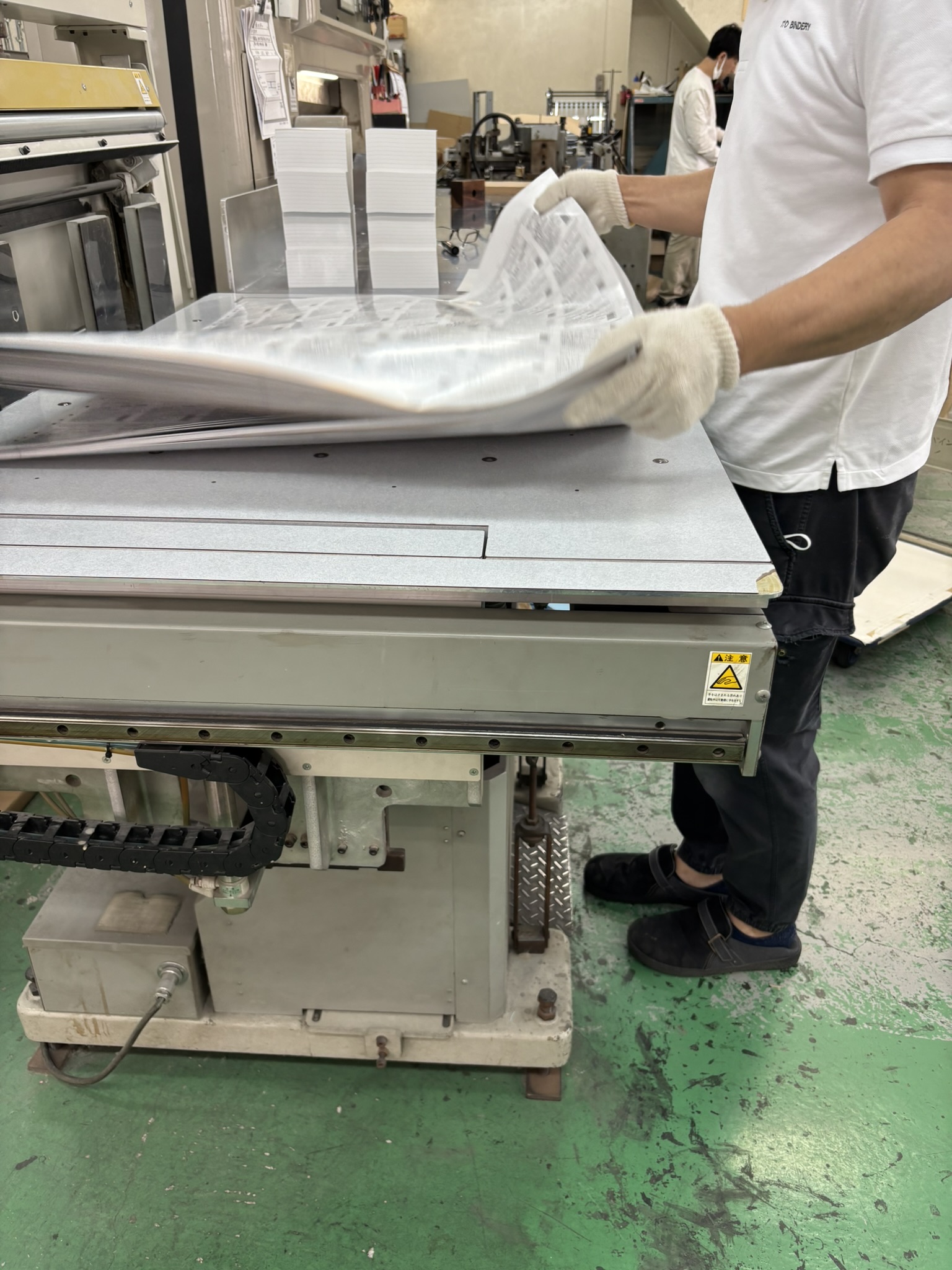
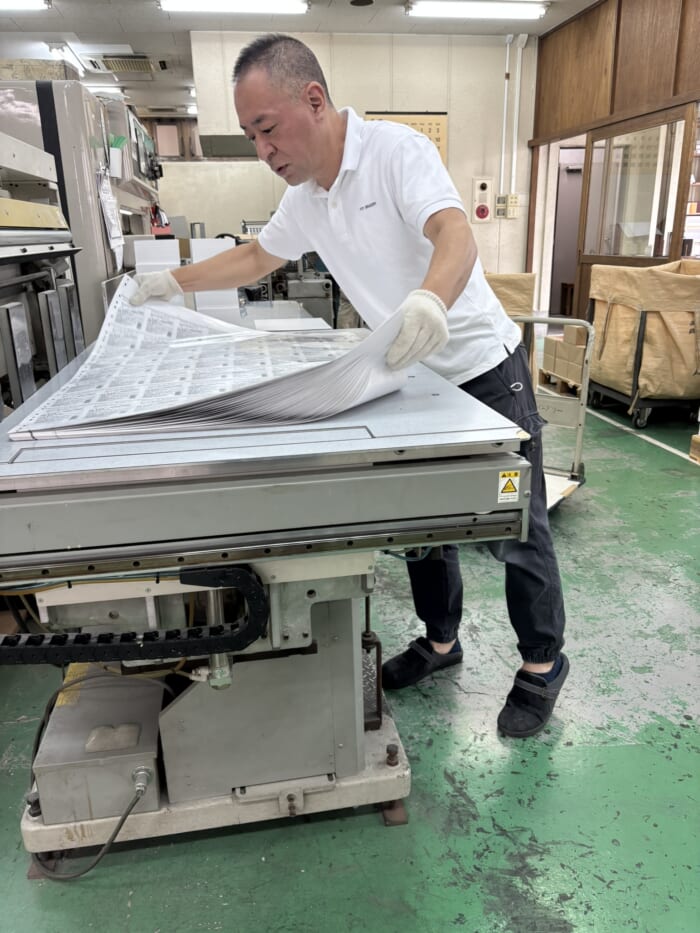
Paper near the bottom of a pallet may have had much of the air pressed out of it by the weight above, causing the sheets to cling together. In that case, more air needs to be introduced than with paper from the top of the stack.
But more air is not always better. If too much air is introduced between the sheets, wrinkles can form when the paper is placed in the jogger and the roller comes down to remove the air.
We look at the condition of the paper and adjust how much air to introduce.
Even within the same task of “aligning,” the adjustment changes with the paper.
Machines Still Need Human Hands
Aligning paper is not something that can be done entirely by machines. Even when a paper jogger or cutting machine is used, the process begins with someone handling the paper.
We feel the paper as we hold it. We watch how air moves between the sheets. We run our hands along the edge to check for even the slightest irregularity.
Some parts of the process are handled by machines; others are adjusted by hand. Moving between the two, we make small adjustments according to the condition of the paper. Even the same paper is not necessarily in exactly the same condition every day.
That is why someone needs to touch the paper, observe its condition, and make those fine adjustments.
Preparing for the next process
“To align the paper properly is to guide it more accurately into the next process.”
Talking with the people working in the factory makes it clear that aligning paper is not simply about making a stack look neat.
Before paper can be cut, it first needs to be properly aligned. And once it has been cut, it is aligned again before moving on to the next process.
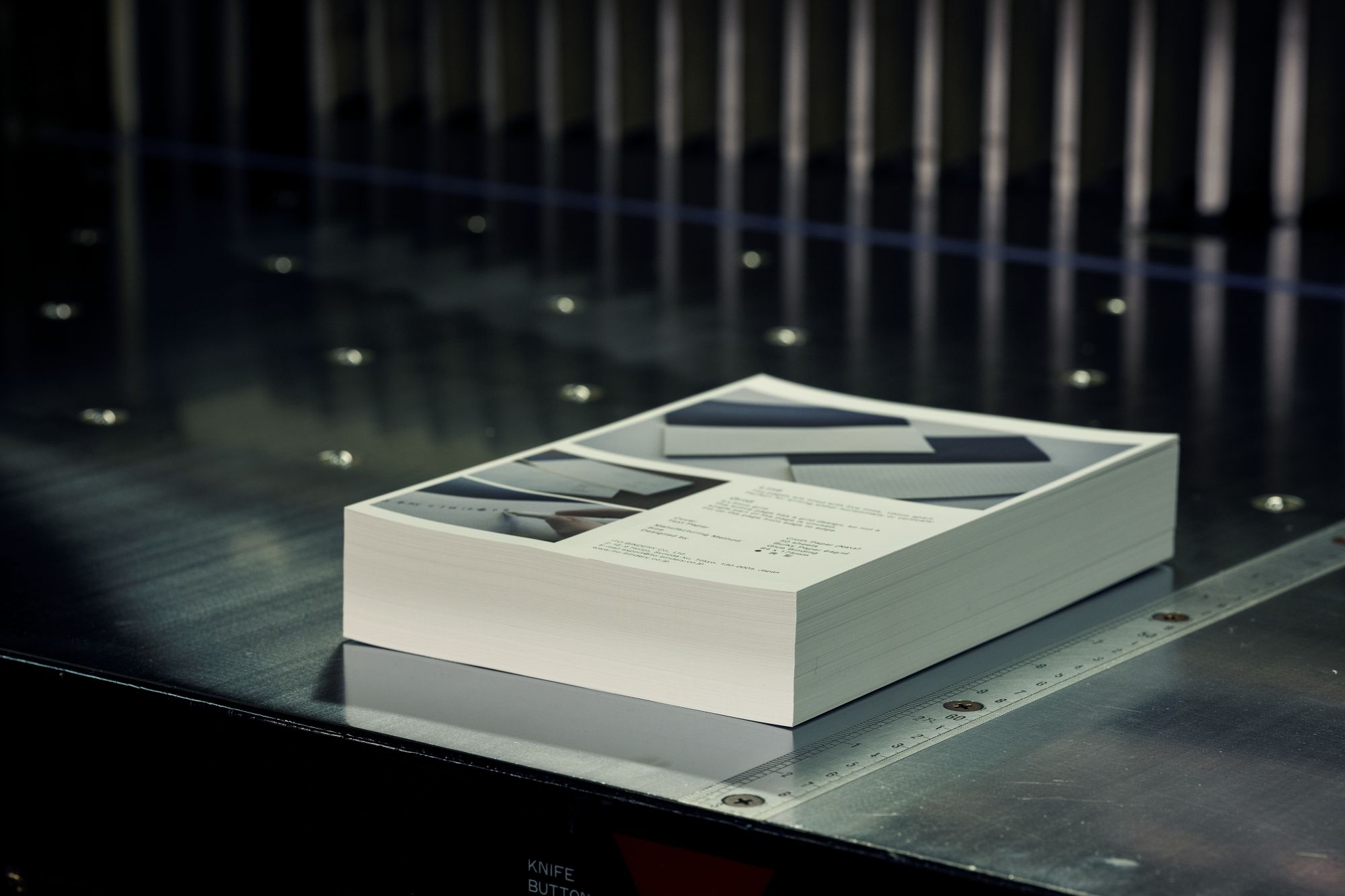
Paper needs to be aligned not only for cutting, but throughout the bookbinding process. Before folding, the sheets are aligned and then fed into the machine.
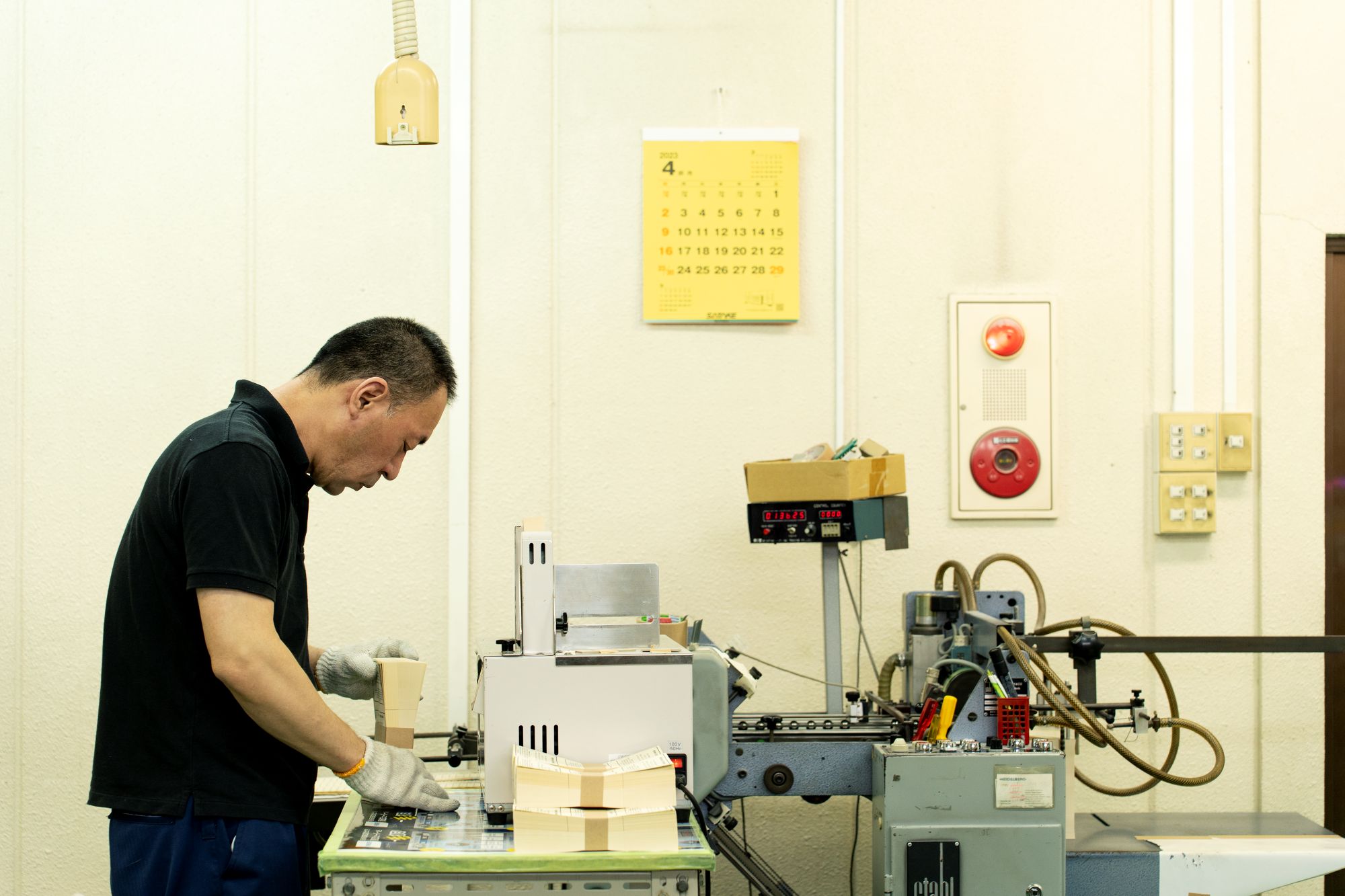
After folding, the paper is aligned again. We press it firmly to remove the air, then stack it neatly in set quantities.
This keeps the stacks stable when they are moved to the next process and makes them easier to wrap securely.
For saddle stitching, the sheets also need to be properly aligned before they are placed into the machine. If they are not aligned, they may cause a paper jam.
One process ends, and the paper is aligned again.
In this way, aligning is repeated throughout the bookbinding process.
No Room for Error
With the Memo Block, the edge we align is the same edge where the glue is applied.
That means the sheets need to be properly aligned before gluing. If the edge is uneven at this stage, applying glue will not make it smooth. And once the glue has dried, it is too late to realign the sheets. That is why the paper needs to be properly aligned before the glue is applied.
Hundreds of sheets are stacked together, yet the edge of a Memo Block appears as one smooth surface. That finish is not created by the final cut alone. It is the result of repeatedly touching, aligning, and checking the paper throughout the processes that come before it.
See it, touch it, align it
As part of the Sumida Gosai Art Festival currently taking place in Sumida, visitors can experience one small part of this work of aligning paper by actually handling it themselves.
Try aligning the paper with your own hands. Look at the edge after you have aligned it.
Then compare it with paper aligned in the bookbinding factory and with an edge finished by a cutting machine.
It is one of the many parts of bookbinding that is difficult to see once a product is complete.
Every day in our factory, we align paper.
When you visit our factory, we hope you’ll take a moment to see how we align paper throughout the bookbinding process.